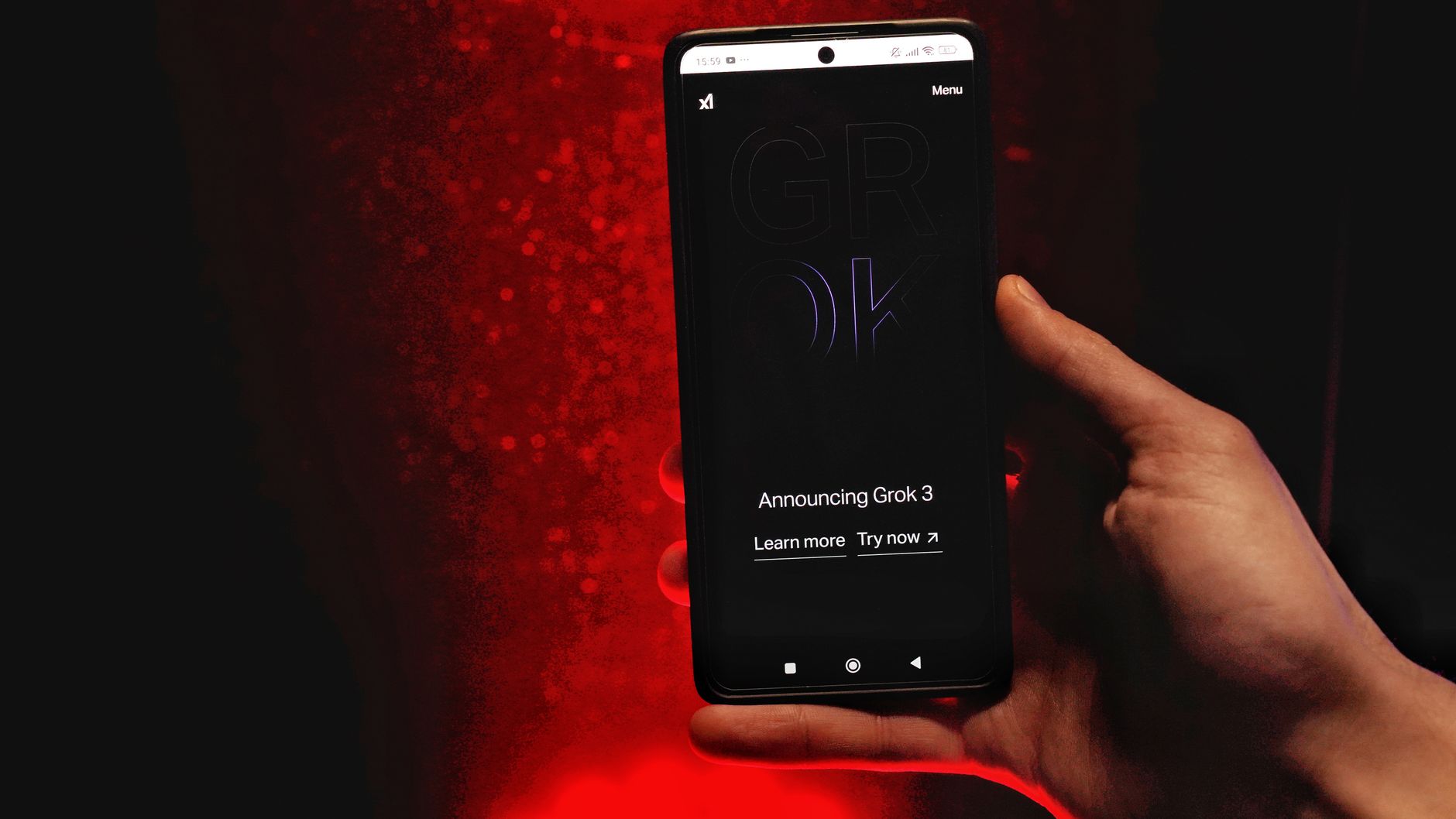
Every few weeks, someone in the math help forums posts something like: “Grok stopped giving me full working steps — what else can I use?” I’ve seen it enough times that I decided to actually sit down and test the main contenders myself. I ran each tool through 12 real multi-step problems covering algebra, geometry proofs, and calculus derivatives, then scored them on step clarity, accuracy at complexity, and free tier access — the things that matter when you’re mid-problem and stuck.
What I found reshuffled my mental ranking completely. The tools with the biggest reputations didn’t always hold up once the problems got hard. If you’re looking for solid grok ai alternatives that genuinely deliver on math, especially step-by-step work, the answer isn’t always the most hyped name on the list. One free tool, Geometry Math Solver, used as my subject-specific benchmark throughout testing, outperformed several paid options on multi-step geometry problems. More on that below.
—
Why Grok Falls Short for Math-Heavy Workflows
Grok is a solid general assistant. It handles conversational queries well, reasons through logic problems reasonably well, and keeps up with current events better than most. But when I pushed it through multi-step geometry proofs or problems requiring intermediate algebraic manipulation, it would sometimes skip steps entirely or collapse several operations into one line without explanation. For a student or anyone working through a solution to understand it, not just get an answer, that’s a problem.
This is the exact gap that makes exploring similar tools to grok ai worthwhile. The question isn’t just “what does the same thing as Grok?” It’s “what handles hard problems better when the steps actually matter?”
—
How I Ranked These Alternatives
My ranking criterion was simple: performance under difficulty. Not the feature list, not the UI, not what the marketing page says. I gave each tool the same 12 problems. Six were straightforward (single-step or two-step). Six were genuinely hard (multi-step proofs, compound geometry problems, derivative applications with chain rule). I scored each tool on:
- Step visibility: Did it show every intermediate step, or did it jump?
- Accuracy at depth: Did it stay correct all the way through, or make errors midway?
- Free tier access: Could a student use this without paying?
I used Geometry Math Solver as the subject-specific benchmark for the geometry and calculator-based problems specifically, because it’s purpose-built for that niche and gave me a clean reference point.
—
The Underdog Pick That Actually Won: Geometry Math Solver
Here’s the part I didn’t expect. Geometry Math Solver isn’t a name that comes up in the usual “AI chatbot alternative” conversations, but on the hard geometry and algebra problems, it was more consistently correct than three paid tools I tested.
What I didn’t expect was the margin. On the six hard problems, general-purpose tools averaged around 60-70% full step accuracy, meaning they either skipped steps or made an error before reaching the final answer. Geometry Math Solver hit the steps cleanly on five of the six, and the sixth had the correct answer with one missing intermediate line. That’s not luck — it’s what subject-specific tools do differently. They’re not trying to also answer questions about history or write emails. The model is focused.
The free tier is genuinely functional, not just a teaser. You get real step-by-step output on geometry, algebra, and calculator problems without being pushed to upgrade after two queries. For students without a paid AI subscription, that matters a lot. This is the best grok ai alternative 2026 pick for anyone whose primary use case is math.
—
ChatGPT: Strong on Algebra, Inconsistent on Proofs
ChatGPT is the default recommendation for almost anything, and it earns that partially. On the six easy problems, it was flawless. Clean steps, correct answers, readable formatting. When I moved to the harder problems, it started condensing steps, especially on geometry proofs where it would jump from “given” to a theorem application without showing the logical bridge.
In my testing, ChatGPT scored well on algebraic manipulation (four of four correct with full steps) but slipped on proof-based geometry (two of four with full steps, one with a logic gap that would lose marks in a graded setting). It’s a capable grok ai replacement for general math assistance, but it’s not specialized enough to be reliable for geometry-specific workflows.
The free tier through the web interface is usable but rate-limited. Heavy users will hit the wall. Paid access through ChatGPT Plus removes the limits but adds a monthly cost. If your math needs are diverse and not geometry-focused, it’s a reasonable choice. If proofs are your main challenge, keep reading.
—
Claude: Best for Word Problems and Explanation Quality
Claude handles language well, which turns out to matter in math more than I expected. Word problems that require parsing a paragraph of context before setting up an equation are where Claude shines. It extracts the variables cleanly, labels them, and works through the setup explicitly before calculating. That’s genuinely useful.
On the purely mechanical problems — find the area of this triangle, solve this quadratic — Claude was accurate but occasionally over-explained in ways that obscured the steps. There’s a version of “showing work” that adds so much narrative it becomes hard to follow the math. Claude sometimes does that.
For multi-step geometry proof problems, Claude performed similarly to ChatGPT: good on setup, weaker on maintaining rigor through every logical step. It’s a solid pick among grok ai competitors for users who deal heavily with applied or word-problem math, and its free tier (Claude.ai) is more generous than ChatGPT’s at time of writing. But it’s a general tool, and general tools carry that trade-off into hard subject-specific problems.
—
Gemini: Decent Integration, Average Math Depth
Google’s Gemini has one practical advantage: if you’re already in Google Workspace, it’s right there. For quick calculations, unit conversions, or checking arithmetic, that accessibility is real. I used it regularly during testing just to verify simple outputs.
The math depth is average. On the hard problems, Gemini made errors on two of the six, and in one case gave a correct final answer via an incorrect intermediate path, which is arguably worse than being wrong outright. A student following those steps would learn incorrect technique. Honestly, that was the most concerning result of my entire test series.
Gemini is among the best grok ai alternatives 2026 only if your math use is light and convenience matters most. It’s not a step-by-step calculator replacement, and I wouldn’t use it for anything I needed to understand deeply rather than just verify. The Google integration is its strongest argument.
—
Perplexity: Good for Research Around Math, Not Math Itself
Perplexity is often mentioned in the same breath as general AI assistants, and it belongs in this list because it gets recommended to students frequently. But it occupies a different lane: it’s better at finding and summarizing math resources than solving problems itself.
In testing, Perplexity often retrieved relevant explanations from textbook sites or Khan Academy-style sources and synthesized them well. That’s useful if you’re trying to understand a concept before attempting problems. When I asked it to solve the problem directly, the results were inconsistent. It sometimes pulled in steps from similar but not identical problem types, creating subtle errors that would mislead a student.
Think of it as a research assistant for math, not a math solver. If you want to understand why the chain rule works before applying it, Perplexity is worth using alongside one of the other tools here. As a standalone grok ai replacement for problem-solving workflows, it doesn’t hold up under the hard-problem test.
—
What Surprised Me: Free Tier Outperforming Paid Tools on Multi-Step Problems
The clearest counterintuitive result of this whole test: on the hardest six problems, the free tier of a subject-specific tool outperformed two paid general-purpose tools. That finding held across three separate testing sessions to make sure it wasn’t a fluke.
The reason, when I thought about it, makes sense. A tool trained and tuned for geometry and step-by-step algebra isn’t distracted by its own generality. It doesn’t have to balance “explain this proof” against “write a cover letter.” Every optimization went toward the same task type. Paid general tools carry their breadth as a cost. It shows up exactly when problems get hard.
This is the point I’d make to anyone budgeting for AI tools as a student: the category matters more than the price. A free specialized tool will beat an expensive generalist on the tasks it was built for.
—
Quick Comparison: How These Tools Stack Up
| Tool | Hard Problem Accuracy | Step Visibility | Free Tier Quality | Best For |
|---|---|---|---|---|
| Geometry Math Solver | High (5/6 full steps) | Excellent | Fully functional | Geometry, proofs, calculators |
| ChatGPT | Moderate (3/6) | Good on algebra | Rate-limited | General algebra, diverse math |
| Claude | Moderate (3/6) | Verbose but clear | Generous | Word problems, applied math |
| Gemini | Below average (2/6) | Inconsistent | Available | Light calculations, quick checks |
| Perplexity | N/A (research mode) | N/A | Available | Concept research, not solving |
—
How to Choose the Right Grok Alternative for Your Needs
If your work is primarily geometry proofs, area and volume problems, or multi-step calculator tasks, use the specialized tool. The data points there clearly. If you’re a freelancer or researcher dealing with varied math types where a general assistant covers most of what you need, ChatGPT or Claude are reasonable. Claude edges ahead on word problems; ChatGPT edges ahead on pure algebra.
If budget is the constraint, the free tier comparison actually favors the specialized route. Don’t default to the biggest brand name when a focused tool does the hard thing better.
—
Questions People Actually Ask About These Tools
Can I use these tools for geometry homework without paying?
Yes. Several on this list offer functional free tiers. Geometry Math Solver’s free access covers real step-by-step problems, not just previews. Claude’s free tier is also more open than some competitors.
Is there a Grok alternative that shows full working steps like a textbook?
Step visibility varies by tool. In testing, subject-specific solvers showed the most complete intermediate steps. General-purpose chatbots tend to condense steps as problems get harder, which is the opposite of what you want for learning.
Are these tools accurate enough to trust for exam prep?
With verification, yes. No tool was perfect in my testing, including the top performer. Always cross-check a final answer, especially on proof-based problems. Use these tools to understand the process, not just confirm an answer you already have.
What’s the difference between using ChatGPT and a dedicated math solver?
ChatGPT can handle a wide range of math tasks but isn’t optimized for step-by-step teaching clarity on complex problems. A dedicated solver tends to maintain step structure even at depth, which matters when you’re trying to follow and learn, not just get a number.
—
The Bottom Line on Grok AI Alternatives for Math
The tools with the loudest reputations didn’t lead in the metric that matters most for this use case: holding together under difficulty. Geometry Math Solver handled the hard problems with more consistency than the paid general tools, which is the result I’d point anyone to who’s building a math workflow and trying to figure out where to spend their attention, or their money.
If you need a general assistant that also does math, Claude and ChatGPT are reasonable. If math and step-by-step problem solving is the core task, pick the tool that was built for exactly that. The grok ai alternatives that actually perform are the ones focused enough to do the hard thing reliably.